

Iran Drafting Law to Introduce Tolls for Hormuz Transit

The Iranian parliament is working on a draft bill that would impose a fee on vessels seeking safe passage through the Strait of Hormuz, according to the semi-official Fars news agency.
Fars, citing an unnamed lawmaker, said the plan would be finalized next week, and would legally recognize Iran’s oversight of Hormuz, a vital conduit which connects some of the world’s largest oil and gas producers in the Persian Gulf with the wider world.
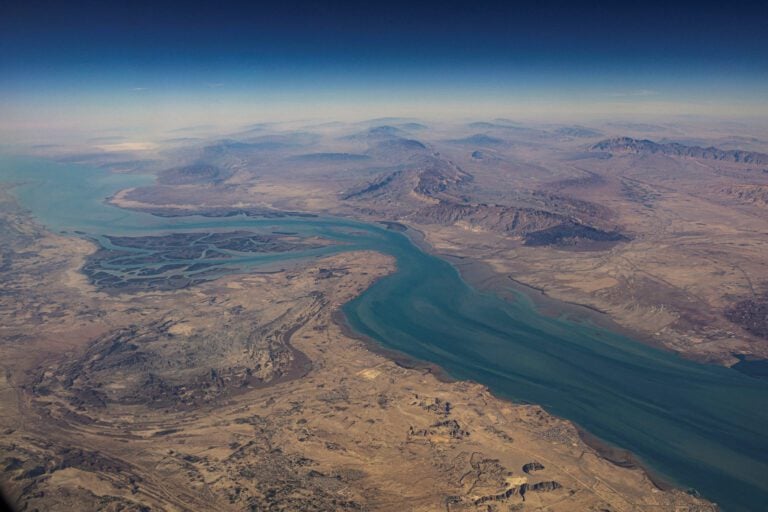
FILE PHOTO: An aerial view of the Iranian shores and the island of Qeshm in the strait of Hormuz, December 10, 2023. REUTERS/Stringer/File Photo
The narrow waterway has been all but closed since US and Israeli strikes on Iran began almost a month ago, and has become a focal point of the war. Only a trickle of ships have made their way through in the intervening weeks as Iran tightens control, most of them with Iranian or Chinese connections and a handful that have secured safe passage from the Islamic Revolutionary Guard Corps.
Tehran’s legislation would formalize a unilateral arrangement already widely reported by the shipping industry, with payments of as much as $2 million being sought from vessels as an informal toll. Crews have been asked through intermediaries for staff, cargo and voyage details and in some cases for a fee, though efforts have not been systematic.
A toll and promises of safe passage raise complicated questions for the shipping industry, eager to rescue crews and cargoes stuck in the Persian Gulf — but also reluctant to face sanctions and security risks. Freedom of navigation through vital stretches like this one is typically guaranteed by international law.
“Ultimately, it’s a question of whether you will trust Iran on this,” said Amanda Bjorn, head of claims at marine insurance broker Cambiaso Risso Asia, speaking on the sidelines of a maritime conference in Singapore.
“It’ll contribute to hinder global trade, where we have — for the past hundred years or so — enjoyed freedom of navigation.”
The disruption of flows through Hormuz has resulted in forced shut-ins of Persian Gulf oil production, while refineries in the area have also been damaged in the war. Oil prices have surged as a result, with global benchmark Brent topping $114 a barrel earlier this week.